
Why Does IVCSD Have a Parking Compliance Program?
We Know It's Not Fun. But Here's the Bigger Picture.
Nobody loves a parking ticket. We get it, and we don't take it lightly. But we also know that on-street parking in Isla Vista is over 100% capacity, meaning there are more cars than legal spaces to hold them. If you're a resident of Isla Vista, you know that's not a small inconvenience. It's a daily reality that makes life harder for the people who live here.
So we had to ask ourselves: how do we actually fix this? The answer isn't just "more enforcement." It's a long-term shift, discouraging car ownership for those who don't truly need one, while building sustainable transportation that's good enough that fewer people feel like they need a car in the first place. Imagine an Isla Vista where public transit, biking, and walking are so convenient that owning a car here feels unnecessary, and where the people who do need to drive can actually find a parking spot when they get home. That's what we're working toward, and parking enforcement is one piece of getting there.
How We Got Here: Two Community-Driven Studies
This decision wasn't made overnight, and it wasn't made without listening to this community first.
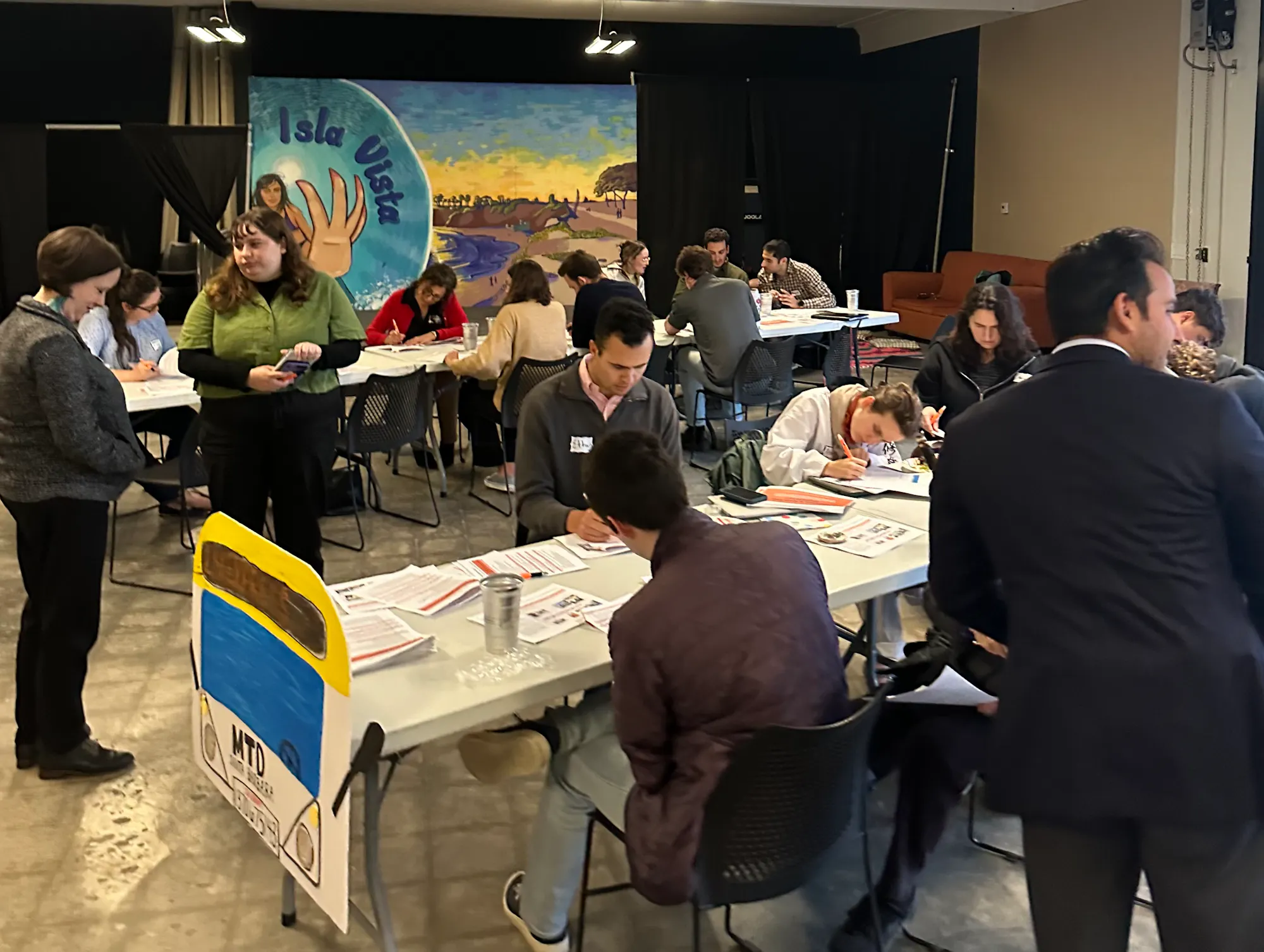
The Isla Vista Community Mobility Plan: In 2021, IVCSD received a $182,158 grant from the California Air Resources Board to develop an equity-based Community Mobility Plan for Isla Vista. Over the following years, we heard directly from residents through surveys, workshops, pop-up demonstrations, and town halls, gathering over 1,000 responses to our Mobility Survey alone, to understand what sustainable transportation improvements the community actually wanted to see, from bike lanes to bus stops to safer crosswalks. The plan was approved by the IVCSD Board of Directors on November 12, 2024. You can read the full plan on our Community Mobility Plan page.
The Isla Vista Parking Study: Alongside the Mobility Plan, IVCSD partnered with UC Santa Barbara and the County of Santa Barbara, each contributing $82,000 toward the $246,000 study, to take a close look specifically at parking. Working with consultant Dixon Resources Unlimited, we collected a full year of on-street parking data (April 2023 to April 2024) and over 1,200 survey responses from residents. The data confirmed what many long-time residents already suspected: a significant number of cars sit in the same on-street spot for months at a time without moving, suggesting many students park their car at the start of the school year and don't move it again until they head home. The resulting Parking Action Plan, which recommended implementing a parking compliance program to help address safety and mobility issues, was approved by the Board on November 12, 2024. You can read the full findings on our Parking Study page.
Together, these two studies gave us both a community vision for sustainable transportation and the hard data confirming just how much of our parking congestion comes from cars that barely move for months at a time.


Why We Launched Parking Enforcement
To be clear: parking enforcement was not launched to generate revenue. It was launched to discourage car ownership among those who don't truly need a car here, freeing up space for community members who do need to drive.
Fairness and access: By reducing the number of cars sitting unused in on-street parking, we're hoping to make it easier for those who genuinely need their cars, whether for work, family obligations, or other necessities, to actually find a place to park.
Safety: Cars parked in front of driveways can block emergency vehicles and first responders from quickly reaching homes when needed. Cars parked on red curbs reduce visibility for drivers turning corners, making it harder to see pedestrians near crosswalks and increasing the risk of collisions.
Accessibility: When cars block sidewalks and driveways, they leave little to no room for pedestrians, including people using wheelchairs or other mobility aids, and parents with strollers. This often forces pedestrians into the street. Isla Vista is also home to a large biking community, and blocked sidewalks can push both pedestrians and bikers into more dangerous positions on the road. For many residents with accessibility needs, this makes simply getting around Isla Vista feel unsafe.
Our Goal
Parking enforcement is one part of a broader, community-informed effort to make Isla Vista safer, more accessible, and easier to navigate, whether you drive, bike, or walk. We know change like this takes some getting used to, and we appreciate your patience as we work toward an Isla Vista with better transportation options for everyone.
Adjusting to These Changes
As Isla Vista adapts, we want to make sure you have what you need, whether you're going car-free or bringing a car with you. Visit our Do You Need a Car in Isla Vista? page for tools and resources to help you navigate life in IV, with or without a car.